
· 11 min read
Is Pipedrive Worth It? Key Points for B2B Sales Teams
By Roadmap Sales

When a company starts losing control over negotiations, deadlines, and follow-ups, the question arises quickly: is a CRM like Pipedrive really worth it? In our experience, the answer depends less on the brand of the tool and more on the commercial context. Still, there are cases where the choice makes a lot of sense.
Pipedrive typically works well for B2B teams that need to organize their pipeline, standardize their sales routine, and gain clear visibility into opportunities.
We often see this in Brazilian operations with 10 to 200 employees, which is precisely the profile that seeks support from Roadmap Sales to make informed decisions before investing. The problem is not always a lack of a system. Many times, the issue is adopting a larger or more complex platform than the team can operate on a daily basis.
What Pipedrive Is in Practice
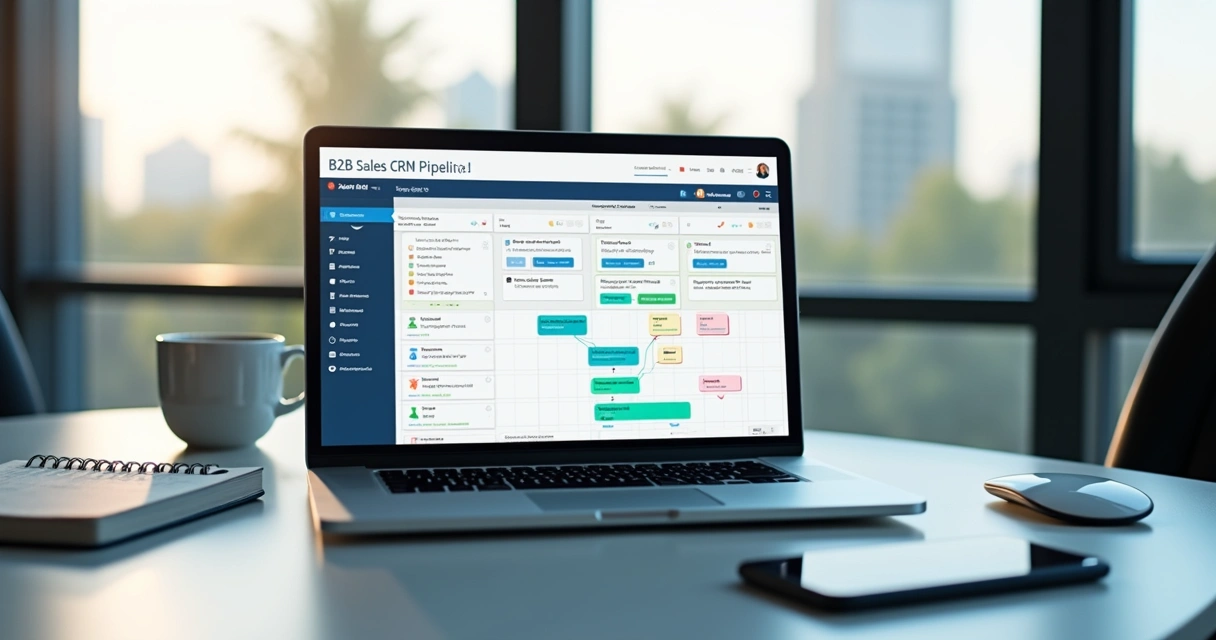
Pipedrive is a CRM focused on sales management. In practice, it helps record contacts, track ongoing deals, forecast revenue, and organize the sales team's tasks. Its most well-known feature is the simple funnel visualization, with cards that move through stages.
For many teams, the greatest value of Pipedrive lies in transforming the sales routine into a visible and repeatable process.
This may seem basic. But it isn't always. We have seen companies with good salespeople and well-defined goals still operating with spreadsheets, scattered messages, and individual memory. The result was predictable: delays in responses, little clarity on conversion, and a heavy reliance on specific individuals.
With a well-configured CRM, leadership gains better visibility:
How many deals entered the pipeline
What stage each opportunity is in
Which salespeople have no future activities
Where the loss rate is higher
Which revenue is most likely to close
This type of visibility changes the conversation between management and the team. Gone is the “I think it’s moving” and in comes “we have 18 proposals stalled for over 10 days.”
Pipeline visibility changes behavior.
Which Companies It Is Typically Recommended For
Not every B2B operation requires the same level of structure. In our view, Pipedrive is typically recommended for companies that already sell consultatively, have reasonably defined sales stages, and want to better document their operations without creating a heavy implementation project.
It tends to fit better in scenarios like these:
Small to medium sales teams with a recurring sales process
B2B service companies with multiple opportunities in parallel
Operations with pre-sales, salespeople, and managers needing shared visibility
Businesses looking to move from spreadsheets to a CRM without stalling the team
In very simple operations, with few contacts and short cycles, the system may be more than necessary. On the other hand, in environments with very technical sales, multiple areas involved, and non-standard flows, it may be necessary to carefully evaluate the level of adaptation required.
That’s why, before adopting any CRM, we recommend a preliminary step: understanding selection criteria. A good starting point is this material on how to choose a CRM, which helps avoid impulsive decisions.
Features That Most Impact Daily Operations
When the question is whether this CRM is worth purchasing, we need to move beyond rhetoric and look at the actual operation. Some features make more difference than others in day-to-day activities.
Pipeline Visualization
The visual funnel is, for many, the entry point. It facilitates reading the volume by stage and reduces the effort to understand what is in progress. Managers like it because they can quickly identify bottlenecks. Salespeople appreciate it because their routine becomes clearer.
A well-designed pipeline helps the team prioritize better without relying on constant reminders.
Automation of Sales Tasks
Automating reminders, creating activities, and changing stages saves operational time. We’re not talking about magic. We’re talking about reducing forgetfulness. In B2B sales, missing the timing of a follow-up can still be costly.
Imagine a team of three salespeople handling inbound leads and prospect accounts. Without automation, each person must remember everything on their own. With basic rules, the system can already schedule next steps, alert about inactivity, and record history with fewer errors.
Reports and Performance Analysis
Another significant gain lies in reports. The tool allows tracking deal volume, conversion rates, cycle duration, and results by salesperson or stage. This supports more objective decision-making.
When a company starts measuring well, it also stops addressing the wrong symptoms. Sometimes the problem isn’t generating more leads. It’s proposals that aren’t progressing. Sometimes it’s not a lack of salespeople. It’s a lack of process.
Differentiators and Limits Compared to Other CRMs on the Market
Without naming names, because the point here is not to turn the choice into a brand dispute, we can say that Pipedrive stands out for combining a user-friendly interface with a very direct commercial focus. Generally, it tends to be perceived as less burdensome for initial adoption than platforms that try to cover everything at once.
The main differentiator of Pipedrive is the ease for the sales team to start using it effectively.
This detail matters a lot. A CRM only generates results when it is consistently fed. And sales teams usually lack patience for confusing systems.
At the same time, there are limits that need to be considered:
Some deeper customizations require adjustments and configuration discipline
Depending on the plan, certain advanced features can increase project costs
Operations with many business rules may miss broader structures
Specific integrations for the Brazilian ecosystem require prior validation
When we evaluate systems at Roadmap Sales, we always emphasize this: a tool that looks good on paper can be poor for a specific company. Fit is what matters.
Integrations, Customization, and Team Maturity
In Brazil, a CRM rarely works alone. It needs to communicate with email, calendars, telephony, forms, marketing, BI, and, in some cases, ERP. Pipedrive offers integrations and also allows connection with other solutions, but the level of fluidity depends on the stack already used by the company.
This is where many projects stumble. The manager buys the system thinking about the funnel but forgets to map data exchanges. Then comes the rework. Duplicate entries, divergent fields, incomplete reports.
Before contracting, it’s worth mapping which integrations are mandatory and which are merely desirable.
Regarding customization, the system adequately meets most usual B2B sales adaptations, such as stages, fields, filters, and views. However, over-customizing can also be a mistake. We have seen operations create so many fields and rules that the CRM ceased to be lightweight. The salesperson began to record data out of obligation, not utility.
The maturity of the team also weighs in. If the team does not yet have the discipline to record contacts, activities, and reasons for loss, the CRM alone won’t solve the issue. It organizes, enforces routine, and highlights flaws. But it does not replace management.
Pricing, Support, and Adaptation by Team Size
The cost of Pipedrive in Brazil varies according to the plan, number of users, and contracted features. The entry price may seem affordable, especially for small teams. However, the total cost needs to include implementation, training, process adjustments, and possible integrations.
Often, the system itself isn’t expensive. The wrong choice is what costs.
As for support, the perception usually depends on the company’s autonomy. Teams with more structured commercial leadership tend to progress better. Companies that need a lot of strategic guidance may feel a lack of closer support, not from the system itself, but from the adoption project. That’s why a neutral diagnosis is so helpful.
For small teams, adaptation tends to be quick. In medium teams, attention should be paid to standardization. And as the operation grows, governance, managerial visibility, and data quality come into play.

If the company is currently in the phase of comparing tools, this content on sales tools can help broaden the perspective without falling into the trap of choosing solely based on the most recognized name.
When It’s Worth It for B2B Sales
Let’s look at concrete situations. In our experience, Pipedrive tends to be worth it when a company wants to bring order to its sales process and does not yet need a very extensive structure.
A common example is a technology company with five salespeople, cycles of 30 to 90 days, and leads coming from different channels. Before the CRM, each salesperson managed their portfolio in their own way. After adoption, leadership was able to standardize stages, measure conversion by source, and enforce follow-ups based on data.
Another typical case appears in B2B consultancies. The owner still participates in sales, the team has grown, and no one knows exactly how many proposals are out, how many meetings have occurred, or why so many deals go cold. With a funnel-focused CRM, the operation gains structure more quickly.
If the company’s problem is commercial disorganization, Pipedrive tends to deliver value sooner.
When It May Not Be Worth It
There are also times when the choice may not make sense. One of them is when the company looks to the CRM as a solution for a lack of process. If the qualification criteria aren’t even defined, the system will only record chaos with more finesse.
Another scenario is very complex sales, with parallel flows, strong involvement of technical areas, extensive approvals, and the need for structures well outside the standard. In these cases, it’s worth evaluating whether the team will have the stamina to adapt the tool without losing simplicity.
It also usually doesn’t make sense when the decision is made solely based on the initial price. A cheap plan can turn into a high cost if adoption stalls or if the system doesn’t integrate with the rest of the operation.
A CRM does not correct poorly defined processes.
For those in the phase of switching, we also suggest reviewing this content on the checklist before changing CRMs. It helps avoid the classic mistake: changing platforms without addressing the root cause of the problem.
How We Would Conduct This Evaluation
If a sales leader were to ask us today whether Pipedrive is a good choice, we would first respond with other questions:
Is your funnel at least minimally outlined?
Does the team have the discipline to record activities?
Are the critical integrations mapped?
Does the manager want real visibility or just control?
Does the sales process fit into a more straightforward commercial structure?
If most of these answers are positive, the chance of success increases significantly. If not, the best path may be to adjust the process before contracting.
For those wanting a more specific view of the tool, we have gathered dedicated material on Pipedrive. And for those already comparing adoption scenarios, it may also make sense to see this content on hubspot vs pipedrive, always with the care to bring the decision back to the reality of the operation.
Conclusion
In the end, when the question is whether Pipedrive is worth it, our answer is simple: it is worth it for B2B companies that need to organize sales, provide visibility to the funnel, and create a sales routine with less friction in usage. It tends to work best for teams that want to start well without turning the CRM into a heavy project right from the start.
The best CRM is not the most famous one, but the one your team can use consistently and with real returns.
If you want to decide more securely, without relying on biased opinions, get to know Roadmap Sales and get a free diagnosis. In just a few minutes, we help your company understand which options make the most sense for your scenario and which implementation roadmap reduces errors before the investment.

Frequently Asked Questions
What is Pipedrive for B2B sales?
Pipedrive is a CRM designed to organize the sales process. In B2B sales, it helps record contacts, track opportunities by stage, manage activities, and measure funnel results. Above all, it is a tool to provide visibility and routine for the sales team.
Does Pipedrive work for small teams?
Yes, it tends to work well for small teams, especially when there is a need to move away from spreadsheets and centralize operations. The learning curve tends to be more user-friendly, which helps companies with few salespeople and leaner management.
What are the main advantages of Pipedrive?
The most perceived advantages tend to be the clear visualization of the pipeline, ease of use, automation of sales tasks, and performance reports. For many B2B teams, the quickest gain is in reducing forgetfulness and providing predictability to the funnel.
How much does it cost to use Pipedrive in Brazil?
The cost varies according to the contracted plan, number of users, and activated extra features. Besides the monthly fee, it’s worth considering implementation, training, and integrations. Therefore, the real price of the project is not always just the per-user rate.
Is Pipedrive suitable for complex sales?
It depends on the level of complexity. It works well for many consultative B2B operations, but may require more adjustments in sales with very long processes, multiple areas involved, and non-standard rules. In these cases, the best decision is to evaluate the tool’s fit with the process before contracting.
Want this tailored to your stack?
Run the free assessment and get a personalized report with fit scores, tradeoffs, and rollout guidance.
Start free assessment