
· 13 min read
How to Integrate WhatsApp with CRM to Boost B2B Sales
By Roadmap Sales

In many B2B companies, WhatsApp has become part of the sales routine. The problem arises when conversations are disconnected, lacking a centralized history, no link to opportunities, and no standardized service. The team responds quickly but loses context. The manager sees volume but not process. And the customer feels it when each contact starts from scratch.
Connecting WhatsApp to CRM means transforming conversations into sales data, history, and next steps.
We often see this in sales operations with 10 to 200 employees. The channel works, generates responses, and accelerates initial contact. However, without integration, it also opens the door to rework, recording failures, and excessive reliance on the salesperson who “knows off the top of their head” the status of each negotiation.
When we talk about integrating WhatsApp with CRM, we are not just referring to receiving messages within a platform. We are talking about creating a flow where leads enter the funnel, conversations are recorded, tasks are triggered, and business decisions are based on real data. This changes management.
In our work, including diagnostics like those from Roadmap Sales, we find that this type of integration often makes more sense when a company wants to organize growth, reduce errors, and provide predictability to the sales team. It’s not just technology. It’s operation.
Why WhatsApp Has Gained So Much Ground in B2B
For years, email was the standard channel for commercial contact. It remains relevant, of course. But WhatsApp has gained ground for a simple reason: it shortens the time between question and answer. In B2B sales, this is significant, especially during qualification, follow-up, and alignment among multiple decision-makers.
In B2B, speed does not replace method, but it accelerates relationships when there is a process behind it.
We like to think of a common scenario. A lead fills out a form requesting contact. Within minutes, they receive a clear message, with the name of the responsible person, context of the approach, and a suggested next step. The contact responds, the conversation continues, and everything is recorded in the CRM. The salesperson does not need to copy and paste notes elsewhere. The manager does not need to ask later what was agreed upon.
This is the point. WhatsApp alone brings people closer. The integration with CRM organizes.
- Reduces response time to the lead.
- Gathers conversation history in the customer record.
- Helps distribute contacts among salespeople.
- Enables simple and useful automations.
- Improves visibility of the funnel and stalled stages.
When this design is well executed, the channel stops being improvised and becomes a real part of the sales process.
What Your Company Gains from This Integration
There are visible benefits right from the first weeks, and others that appear as the operation matures. The first gain is usually the centralization of information. Without this, the CRM remains incomplete, and WhatsApp becomes a parallel universe.
If the conversation happens outside the CRM, commercial management becomes blind in parts of the funnel.
Another clear gain is agile service with context. The salesperson sees who the contact is, which company they represent, what stage they are in, what interactions have already occurred, and what the last promise made was. This avoids generic messages and reduces the unpleasant effect of asking for information that has already been provided.
Personalization also improves. Instead of cold texts, the team can adapt communication based on the segment, account size, lead source, and negotiation moment. In B2B, this makes a difference because each conversation tends to have more layers, more people involved, and a less immediate cycle.
Moreover, automation helps maintain rhythm without losing control. It is possible to schedule receipt confirmations, follow-ups after inactivity, meeting reminders, material sending, and initial screening with a chatbot. None of this replaces the salesperson. But it reduces manual work and preserves consistency.
Good conversations also need structure.
How It Works in Practice
Many people imagine integration as an isolated function. In practice, it participates in various stages of the sales routine. Let’s look at some common scenarios we observe in B2B operations.
Lead Capture
A visitor arrives at the website, clicks the WhatsApp button, and starts the conversation. Instead of falling into a loose box, this contact can already become a lead in the CRM with date, source, responsible person, and qualification tags.
The best scenario is when the first contact automatically creates or updates the lead record.
This allows knowing how many opportunities came from the channel, which campaign generated the most conversations, and which initial messages receive the most responses.
Conversation Recording
This point is often decisive. Every relevant exchange is associated with the company, the contact, and the ongoing business. If there is a change in responsibility, vacation, or departure of the salesperson, the history remains.
We have seen companies lose commercial momentum because the entire negotiation was on the phone of a single person. When the CRM receives the conversations, knowledge stops being individual and becomes operational.
Negotiation Management
Another strong application is in pipeline monitoring. After a conversation, the salesperson can move the opportunity to the next stage, create an activity, record objections, and schedule the next action. In more mature systems, part of this can happen with automatic rules.
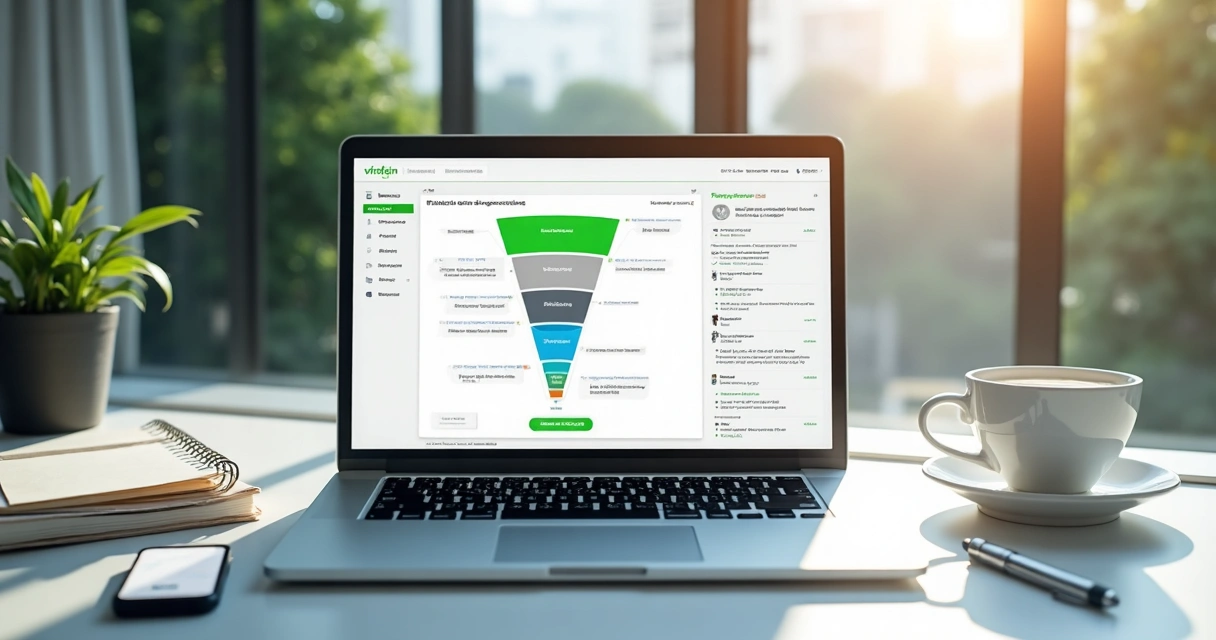
When a company needs to better understand this type of scenario, we often recommend an initial mapping of options for CRM with WhatsApp Business, because adherence varies significantly depending on volume, process, and team structure.
Automation Without Losing the Human Touch
There is a common fear that automation will make conversations impersonal. This only happens when it is poorly used. Good automation does not push cold text to everyone. It organizes the basics and opens space for the team to perform better where human contact truly matters.
Automating is not robotizing sales; it is organizing what currently depends on manual effort.
A chatbot can, for example, ask for the name, company, topic of interest, and urgency. This way, it directs the conversation to the correct queue, records data in the CRM, and reduces screening time. At another point in the funnel, automated messages can confirm meetings, remind about sending proposals, or re-engage a stalled lead.
The most useful automations in B2B tend to be:
- Initial response outside business hours.
- Automatic distribution by portfolio, region, or segment.
- Task creation after a message goes unanswered for a few days.
- Stage update when the lead performs a predicted action.
- Message trigger after conversion on a form or landing page.
There are specialized solutions for this type of flow. In adherence evaluations, we frequently observe tools focused on conversational operations, such as the Roadmap Sales page on Wati.io and also resources related to organizing service in Trilha Whats, always looking at the fit with the CRM and not just the appeal of isolated automation.
The Limits of Improvised Solutions
Many companies start with good intentions and little structure. They use a number on a salesperson's cell phone, then a shared device, and later a manual routine of copying conversations to a spreadsheet. At first, it seems to work. Then, it stalls.
Improvised solutions almost always fail when volume increases or when the team changes.
The signs of wear appear quickly:
- Messages without a clear owner.
- Duplicated leads.
- Loss of history.
- Lack of metrics by attendant or source.
- Difficulty controlling consent and personal data.
There is also the risk of the company relying on fragile adaptations, built with multiple intermediaries and little governance. When one piece fails, the entire process breaks. And the team does not always discover it right away. Sometimes, they find out days later, when the lead has already cooled off.
That’s why we advocate for more robust platforms for operations that want scale and predictability. This does not always mean choosing the most expensive option. It means choosing something stable, traceable, and compatible with how the team sells.
How to Choose the Best Way to Connect WhatsApp and CRM
The decision should not be based solely on the vendor's commercial promise. We suggest looking at objective criteria related to the actual use by the team.
Native Integration or Third-Party Solutions
Native integrations tend to offer fewer points of failure and a more direct experience. Third-party integrations can expand possibilities but require caution regarding maintenance, support, and data consistency.
The more hidden steps there are in the connection, the greater the chance of operational error.
Ease of Implementation
There’s no point in buying a complex structure for a small team with low CRM maturity. It’s better to start with what the team can use well, record correctly, and sustain in their routine.
If the company is still defining pipeline, responsibilities, qualification criteria, and contact cadence, it may need to adjust the process before automating everything. This diagnosis avoids frustration.
LGPD and Security
WhatsApp circulates personal data, corporate data, and, in some cases, sensitive negotiation information. Therefore, the integration must foresee minimum governance: consent when applicable, access control, interaction recording, and a clear data handling policy.
Compliance with LGPD is not a technical detail; it is part of the commercial design.
Data Analysis
A good integration also needs to generate performance insights. How many leads come through the channel? How long does the team take to respond? At what stage do conversations stall? Which profile converts more?
Without this, WhatsApp remains active, but management does not learn from it.

In some cases, the evaluation involves popular CRMs in the Brazilian market. At Roadmap Sales, for example, we gather practical information about tools like Pipedrive and HubSpot, always focusing on the context of the operation and not just on the list of features.
How to Start a Project Without Creating Confusion
Integration projects fail less when they start with simple questions. Who will use it? For what purpose? At what stage? With what volume? What data needs to enter the CRM? Which messages can be automated, and which should remain with people?
We like to work with a lean and grounded sequence:
- Map the current sales process, from lead to proposal.
- Identify where WhatsApp already appears in the routine.
- Define which data needs to be recorded in the CRM.
- Choose the most stable integration model for the company size.
- Implement with a pilot team before expanding.
- Train the team with clear usage rules.
- Measure response, progress in the funnel, and record quality.
Starting small, with a clear process, tends to yield better results than trying to automate everything at once.
For companies with a leaner sales team, it’s worth starting with lead capture, conversation recording, and task creation. More mature operations can advance to routing, chatbots, lead scoring, and stage reports.
The size of the company matters, but maturity matters even more. We have seen small teams operate very well with structured integration. And we have seen larger companies struggle because they tried to build something beyond what they could maintain.
Common Mistakes We See Daily
Some mistakes appear repeatedly. Not due to lack of effort, but because the company rushes to launch the channel before getting the foundation right.
Among the most common, we highlight:
- Using WhatsApp without a clear registration policy in the CRM.
- Automating messages before defining tone, timing, and context.
- Measuring only the quantity of messages, without looking at conversion.
- Concentrating access in a few people.
- Ignoring consent and data governance.
- Choosing a tool based on visual appeal, without validating adherence to the process.
The biggest mistake is not technical. It’s implementing without aligning routine, responsibility, and usage goals.
We also notice another sensitive point: many companies want to solve with a tool a problem that is still process-related. If the team does not know when to approach, how to qualify, and when to advance an opportunity, the integration alone will not fix that.
Tips for Selling More with the Integrated Channel
After implementation, the focus should shift from novelty to intelligent use. It is at this stage that integration begins to influence conversion and relationships.
Some practices help significantly:
- Respond with context, not just speed.
- Use short, objective messages with a clear next step.
- Record objections so commercial patterns appear in the CRM.
- Create cadences by account profile.
- Separate transactional messages from consultative messages.
- Monitor response rates by funnel stage.
We believe that the best use of WhatsApp in B2B occurs when it shortens distances without impoverishing the conversation. It’s not about sending more messages. It’s about having better conversations, at the right moment, based on the right history.

As the operation matures, it becomes easier to segment, re-engage opportunities at the right time, and strengthen ties with clients who require close follow-up. In consultative sales, this matters a lot.
Conclusion
Integrating WhatsApp with CRM is not a passing trend in sales. It is a practical way to combine agility and control in B2B sales. When a company centralizes data, records conversations, automates parts of contact, and tracks indicators, the channel stops being merely convenient and starts to support the process.
The real gain appears when each message helps the team sell with more context, consistency, and visibility of the funnel.
We advocate a simple path: choose a structure compatible with the company size, respect the team’s maturity, and implement with clear rules. No improvisation. No excessive hidden steps. No treating commercial conversation as something outside management.
If your company is evaluating how to do this thoughtfully, it’s worth getting to know Roadmap Sales and using our diagnostic tool to understand which CRM and sales tools make the most sense for your scenario before investing.

Frequently Asked Questions
What is the integration of WhatsApp with CRM?
It is the connection between the messaging channel and the company’s commercial management system. This way, conversations, contacts, activities, and opportunities become linked in the same environment. In practice, integration allows WhatsApp to stop being an isolated channel and become part of the sales process.
How do I connect WhatsApp to my CRM?
The path depends on the chosen CRM and the structure of your operation. Generally, the connection can be made through a native resource of the platform or through intermediate integrations. Before activating, we suggest mapping the commercial process, defining which data should enter the system, creating service rules, and validating LGPD requirements.
Which CRMs are compatible with WhatsApp?
There are several CRMs on the market with different ways to connect to WhatsApp, either through their own integration or through partner solutions. The actual compatibility depends on the type of use your company expects, such as team service, automation, reporting, and pipeline management. Therefore, it’s worth comparing adherence to the process, not just the presence of the feature.
Does integrating WhatsApp with CRM increase sales?
It can increase, provided the company uses the integration to respond better, record history, organize the funnel, and track opportunities methodically. The integrated channel tends to generate more conversion when it reduces loss of context and improves the rhythm of follow-ups. Without a process, however, the effect may be limited.
How much does it cost to integrate WhatsApp with CRM?
The cost varies depending on the CRM, the integration model, the volume of messages, the number of users, and the level of automation desired. There are simpler projects focused on registration and basic service, and others broader, with chatbots, routing, and reporting. We recommend calculating not only the tool's cost but also implementation, training, and operational maintenance.
Want this tailored to your stack?
Run the free assessment and get a personalized report with fit scores, tradeoffs, and rollout guidance.
Start free assessment